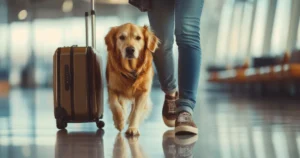
How to Travel with a Dog or any other Pet: Expert Comfort, Safety & Pet Couriers Guide
Travelling with your pet requires advance microchipping, up-to-date vaccinations (such as rabies), and specific health documentation. Whether driving or flying, ensure your pet is secure in a well-ventilated carrier, plan for frequent breaks, and book pet-friendly accommodations early.
- Essential Health & Documentation
Before you travel, you must ensure your pet meets the legal requirements of your destination to avoid quarantine.
- Microchip: Must be implanted before or at the same time as their rabies vaccine.
- Vaccinations: A rabies vaccine is generally required, often administered at least 21 days before crossing borders.
- Travel Documents: Depending on your route, you will need either an Animal Health Certificate (AHC), an Export Health Certificate (EHC), or a valid pet passport. For specific requirements, use the UK Government’s Taking your pet abroad guide.
- Modes of Transport
Different transport methods have specific rules for pets:
- By Car: Always secure your pet using a crash-tested travel crate, a specialised seatbelt harness, or keep cats/small animals in a robust carrier. Never leave a pet unattended in a warm vehicle.
- By Air: Research airlines thoroughly, as policies vary. Many allow small cats and dogs in-cabin if they fit in an airline-approved carrier under the seat. Larger pets may need to travel in a pressurized, temperature-controlled cargo hold.
- By Train/Ferry: Many European train lines and ferry operators offer dedicated pet-friendly cabins or transit kennels.
- Packing for Your Pet
To make the journey comfortable and stress-free, be sure to pack:
- Medical records: Hard copies of their vaccination and microchip details.
- Comfort items: Absorbent bedding, their favorite toys, and a travel-friendly, spill-proof water bowl.
- Travel supplies: Extra waste bags, cleaning supplies, and enough of their regular food for the trip.
How to make your pet comfortable during travel
No matter which method you pick, comfort is everything. A relaxed pet makes for a relaxed journey. Here are practical, tested tips that work for dogs, cats, and even nervous travellers.
Before the journey
- Get your pet used to their carrier or car harness gradually. Leave the carrier out with a blanket inside for a few days before the trip. Take short car rides to build positive associations.
- Feed a light meal about 3–4 hours before departure. Too much food before a long drive can cause sickness. A small, familiar snack is fine.
- Exercise them beforehand. A good walk or play session takes the edge off restless energy.
- If your pet is severely anxious, talk to your vet well in advance about calming supplements or medication that can help but never sedate them without veterinary guidance, especially before air travel.
In the vehicle
- Keep the temperature steady not too hot, not too cold. Climate control in a private pet taxi or your own car makes a big difference.
- Use a secure restraint: a crash-tested harness, a pet seat belt, or a well-ventilated carrier. Never let your pet roam loose in a moving vehicle.
- Bring their favourite blanket or a piece of your clothing. Familiar smells are incredibly soothing.
- Offer small sips of water at every stop. Dehydration makes travel stress worse.
- Keep the music low and avoid sudden loud sounds. Calm, quiet, steady driving helps them settle.
Comfort stops
- Stop every 2–3 hours on long journeys. Let your dog stretch their legs, sniff, and relieve themselves.
- For cats, don’t force them out of the carrier if they’re scared. Just open the carrier door and let them decide. Keep all doors and windows closed so they can’t bolt.
- Use each stop to check your pet’s overall state: Are they panting excessively? Salivating? Pacing? These can be signs of stress slow down the pace and give more reassurance.
After arrival
- Set up a familiar space immediately: their bed, a water bowl, and some food.
- Let them explore the new environment at their own speed. Don’t rush introductions to other animals or new people.
- Keep their routine as similar as possible to home feeding times, walks, and quiet time help them settle quickly.
What are the best pet-friendly travel tips?
Here’s a quick, scannable list of tips that make any journey smoother:
- Book pet-friendly accommodation in advance. Not every “pet-friendly” hotel truly welcomes pets. Read recent reviews from other pet owners.
- Pack a dedicated pet bag. Include food, bowls, water, lead, collar with ID tag, waste bags, any medication, vaccination records, a recent photo of your pet, and a small first-aid kit.
- Update their ID. Make sure your mobile number is on their collar tag and that your microchip details are current especially if you’re travelling abroad.
- Never leave your pet alone in a parked car. Even on a mild day, temperatures inside a vehicle can soar in minutes.
- Plan your route with pet stops. Motorway services often have designated dog-walking areas. Apps and websites list pet-friendly cafes and parks along major routes.
- Carry digital copies of all documents. Photos of your AHC, pet passport, vaccine records, and insurance papers can save the day if an original gets lost.
- Trust your instincts. If your pet is showing signs of extreme distress, take a longer break, adjust your plans, or consider a different travel method.
Are pet couriers safe? What to look for
One of the biggest worries for owners who can’t travel with their pet is whether a pet courier can be trusted. The honest answer: a professional, licensed pet courier is very safe. But you have to choose carefully.
What makes a pet courier safe?
- DEFRA registered and fully insured. This is non-negotiable. A legitimate courier will be transparent about their registration status.
- Exclusive, private transport. Your pet should never be in a van with unknown animals from other households. This reduces stress and disease risk.
- DBS-checked drivers who are trained in animal handling, first aid, and border procedures.
- Climate-controlled vehicles that keep your pet cool in summer and warm in winter.
- Regular updates photos, messages, and live tracking so you always know where your pet is and how they’re doing.
- Clear, written communication. A trustworthy courier will answer all your questions, provide a contract, and never pressure you.
Red flags to avoid:
- No physical address or company registration number.
- Unwilling to provide proof of insurance or DEFRA registration.
- Transporting multiple unrelated animals in the same van with no separation.
- Quotes that seem significantly cheaper than everyone else there’s usually a reason.
Luxurious Pet Move Abroad was built on these exact standards: private, DEFRA-registered, climate-controlled journeys with regular photo and tracking updates. Your pet travels with the same driver the entire way, treated like a member of the family.
Pet relocation companies: when to use one and how to choose
A pet relocation company goes beyond simple transport. They manage the entire door-to-door process, especially for complex international moves (think UK to Australia, US to UK, or multi-country relocations).
When a pet relocation company is worth it:
- Your move involves flights, multiple border crossings, or quarantine rules.
- You need help with import permits, veterinary testing, and customs clearance.
- You want a single point of contact to coordinate everything flights, ground transport, boarding, paperwork.
How to choose a good pet relocation company:
- Look for IPATA membership (International Pet and Animal Transportation Association) this is the industry benchmark.
- Check reviews across multiple platforms (Google, Trustpilot, Facebook).
- Ask for a detailed, itemised quote. It should break down every cost.
- Confirm they handle the entire journey or are clear about which parts are subcontracted.
For UK–Europe moves by road, a specialist pet taxi (like Luxurious Pet Move Abroad) often provides a more personal, direct service than a large relocation company, where the transport element may be outsourced.
Choosing a dedicated Dog Transport UK & Europe service ensures your pet enjoys a direct, private journey with expert handling from start to finish.
How much does it cost to travel with a pet?
Costs vary enormously based on the method, distance, and number of pets. Here’s a rough guide to help you budget.
By private pet taxi:
- Quotes are all-inclusive: door-to-door transport, Eurotunnel, paperwork assistance, comfort stops, tapeworm vet coordination.
- Short cross-Channel trips (e.g., Calais to London) are at the lower end. Long-haul routes (e.g., UK to Spain, UK to Switzerland) cost more due to distance and driver time.
- Requesting a personalised quote is the best way to know prices reflect your exact route and number of pets.
By your own car:
- Eurotunnel return: £100–£350 depending on season.
- Fuel and tolls: £100–£300+.
- AHC: £100–£200 per trip.
- Rabies vaccine (if needed): £30–£70.
- Tapeworm treatment: €20–€60.
- Pet-friendly hotels: £50–£120 per night.
- DIY total estimate: £350–£800+ for a return trip to France, depending on variables.
By ferry (car):
- Ferry ticket: £100–£400+ return.
- On-board pet cabin (if available): £50–£150 extra.
- AHC, vaccines, tapeworm: as above.
- Estimate: similar to Eurotunnel DIY, sometimes less, sometimes more depending on the operator.
By air:
- Airline pet cargo fees: £200–£1,000+.
- Agent fees (if used): £500–£2,000+.
- Crate, vet checks, fit-to-fly: £100–£300.
- Estimate: £1,000–£3,000+ for international air moves.
Frequently Asked Questions
How to travel with a dog that gets car sick?
Feed lightly before travel, keep the car cool, use a secure harness, and take frequent breaks. Ask your vet about anti-nausea medication suitable for dogs.
How to travel with a cat that hates the carrier?
Leave the carrier open in the house with treats and a blanket for days or weeks before travel. Use a calming spray like Feliway in the carrier. Cover the carrier with a light blanket during the journey it reduces visual stress.
What is the safest way to travel with a pet?
A private, DEFRA-registered pet taxi where your pet travels exclusively with a trained driver, with climate control, proper restraints, and regular comfort stops. You’re either with them or getting real-time updates.
Are pet couriers safe for long distances?
Yes, if they are DEFRA registered, insured, and provide private transport with regular updates. Always ask for proof of credentials before booking.
How do I find a trustworthy pet relocation company?
Look for IPATA membership, read real reviews, ask for an itemised quote, and check they handle the entire journey themselves or are transparent about subcontracting.
How much does it cost to transport a dog overseas?
For UK–Europe road transport, it’s often a few hundred pounds for a short trip, rising with distance. For air transport to other continents, costs typically start around £1,000 and can rise significantly.
What should I pack for my pet’s journey?
Food, water, travel bowls, lead, collar with ID, waste bags, medication, vaccination records, a familiar blanket, a recent photo, and any calming aids your vet has approved.
The simplest way to travel with your pet
You’ve now got the full picture every method, every comfort tip, every safety question. Ultimately, the right choice depends on your pet’s needs, your travel distance, and how much you want to manage yourself.
If you prefer a door-to-door experience where everything is handled the driving, the Eurotunnel, the paperwork checks, the tapeworm vet stop, the comfort breaks then Luxurious Pet Move Abroad is built exactly for that. Your pet travels in a private, climate-controlled vehicle, with regular updates and zero stress.





- Book Now
Learn About Our Commitment to Pet care